
Today, Hoi An is famous for its yellow buildings, lanterns, old merchant houses and peaceful riverside.
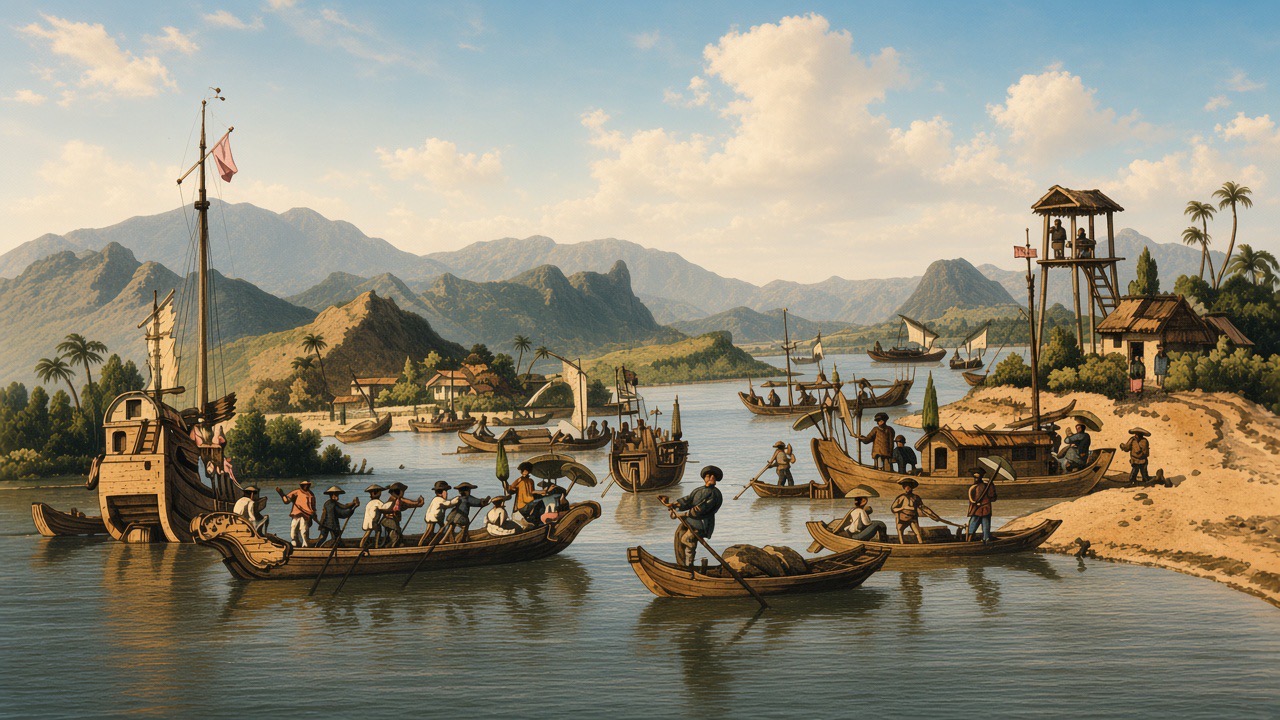
Hoi An developed into an important international trading port between the 15th and 19th centuries.
But several centuries ago, the town looked very different.
Hoi An was one of the important international trading ports in Southeast Asia, particularly during the 16th to 18th centuries. Merchants from China, Japan, Southeast Asia and Europe came here to exchange goods. Ships arrived with products from across the region. Local goods moved from the countryside toward the port.
The Thu Bon River connected Hoi An with the interior of Quang Nam, while the coastline connected the town with wider maritime trade routes.
So naturally, one question follows: If Hoi An was such an important trading port, why did it decline?
The answer isn’t one single event. It was the result of several changes happening over time.
📌 Quick Summary: Why Hoi An Declined
- River Silting: Sedimentation in the Thu Bon River and Cua Dai estuary made the water too shallow for large merchant ships.
- Larger Ships: Global maritime trade shifted toward deeper vessel designs that couldn’t access Hoi An’s riverways.
- The Rise of Da Nang: Da Nang possessed a natural deep-water bay, leading colonial and local authorities to favor it as the main regional port.
- Historical Paradox: Economic stagnation stopped modernization, perfectly preserving Hoi An’s 16th–18th century architecture into today’s UNESCO World Heritage Site.
- 1 Hoi An Was Once a Major Trading Port
- 2 Why Was Hoi An Important for International Trade?
- 3 What Happened to Hoi An’s River?
- 4 How Changes in Maritime Trade Affected Hoi An
- 5 The Rise of Da Nang
- 6 Why Did Merchants Move Away From Hoi An?
- 7 How Hoi An Changed After Its Decline
- 8 How Hoi An’s Decline Helped Preserve the Ancient Town
- 9 Is Hoi An Still a Trading Port Today?
- 10 Frequently Asked Questions
- 11 What Hoi An’s History Can Teach Travelers Today
1. Hoi An Was Once a Major Trading Port
Hoi An developed into an important international trading port, particularly during the 16th to 18th centuries. Merchants from China, Japan, Southeast Asia and Europe came here to exchange goods. Local products moved from the countryside toward the port, while foreign ships brought goods from across the region.
For a period of history, Hoi An was a place where the local and international economies met.
2. Why Was Hoi An Important for International Trade?
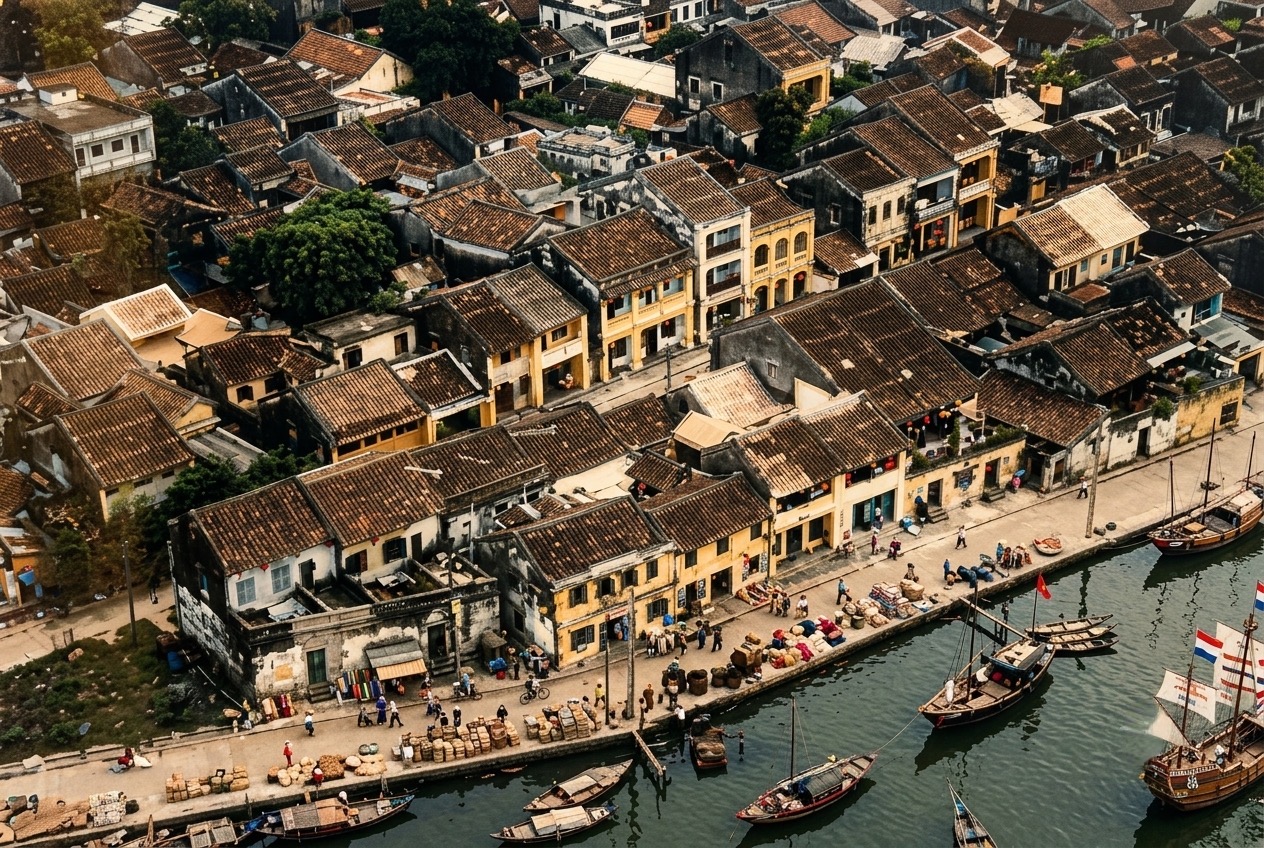
Hoi An connected Vietnamese goods with merchants and trading networks from across Asia and beyond.
The first reason was geography. Hoi An was connected to both the river system and the sea. This was extremely valuable before modern roads and railways existed.
Goods from inland areas could travel downriver. Ships could bring imported goods to the port. Merchants could then distribute products through regional trading networks.
Hoi An also benefited from the wider maritime trade routes connecting East and Southeast Asia. During its most important period, the port attracted merchants from different communities. Japanese and Chinese merchants established commercial relationships and communities in the town. European traders also participated in the wider trade network.
This international character left a permanent mark on Hoi An’s architecture, food and culture — the very features visitors still see in the Hoi An Ancient Town today.
3. What Happened to Hoi An’s River?
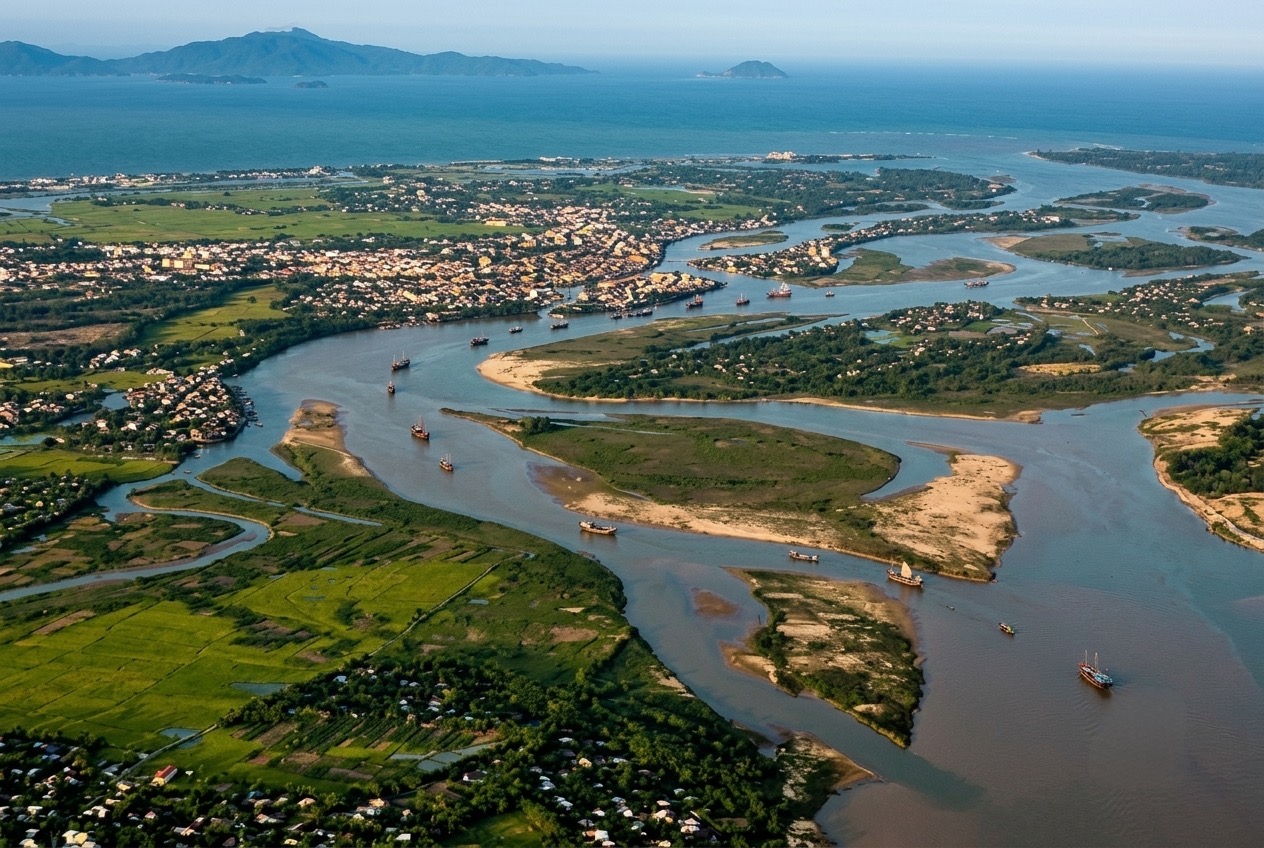
Changes in the Thu Bon River system and coastal waterways influenced navigation and Hoi An’s role as a maritime port.
This is one of the most important parts of the story.
Rivers are not static. They constantly transport and deposit sediment. Over long periods, river channels and river mouths can change.
For Hoi An, gradual changes in the Thu Bon River system and coastal waterways (including the silting of Cua Dai and the Co Co River) affected navigation and the ability of larger vessels to access the port.
This didn’t happen overnight. It was a gradual geographical process that became more noticeable from the late 18th century into the 19th century. The river system that had once helped Hoi An become a successful trading center increasingly created challenges for maritime navigation.
And when a trading port becomes difficult for large ships to access, merchants naturally begin looking for alternatives.
4. How Changes in Maritime Trade Affected Hoi An
The world of international trade was changing too. Ships were becoming larger. Maritime routes were evolving. Ports needed to accommodate increasingly demanding commercial traffic.
A port that worked well for smaller vessels centuries earlier might not be equally suitable for newer ships. This is important because Hoi An did not simply become “less popular.” The economics of maritime trade changed.
The decline therefore wasn’t caused by one sudden disaster. It was a combination of:
- Changes in waterways and sedimentation
- Navigation difficulties for larger vessels
- Changing maritime trade routes
- Competition from other ports
- Political and economic shifts (including policies that later favored Da Nang)
Together, these gradually reduced Hoi An’s role in international commerce.
5. The Rise of Da Nang
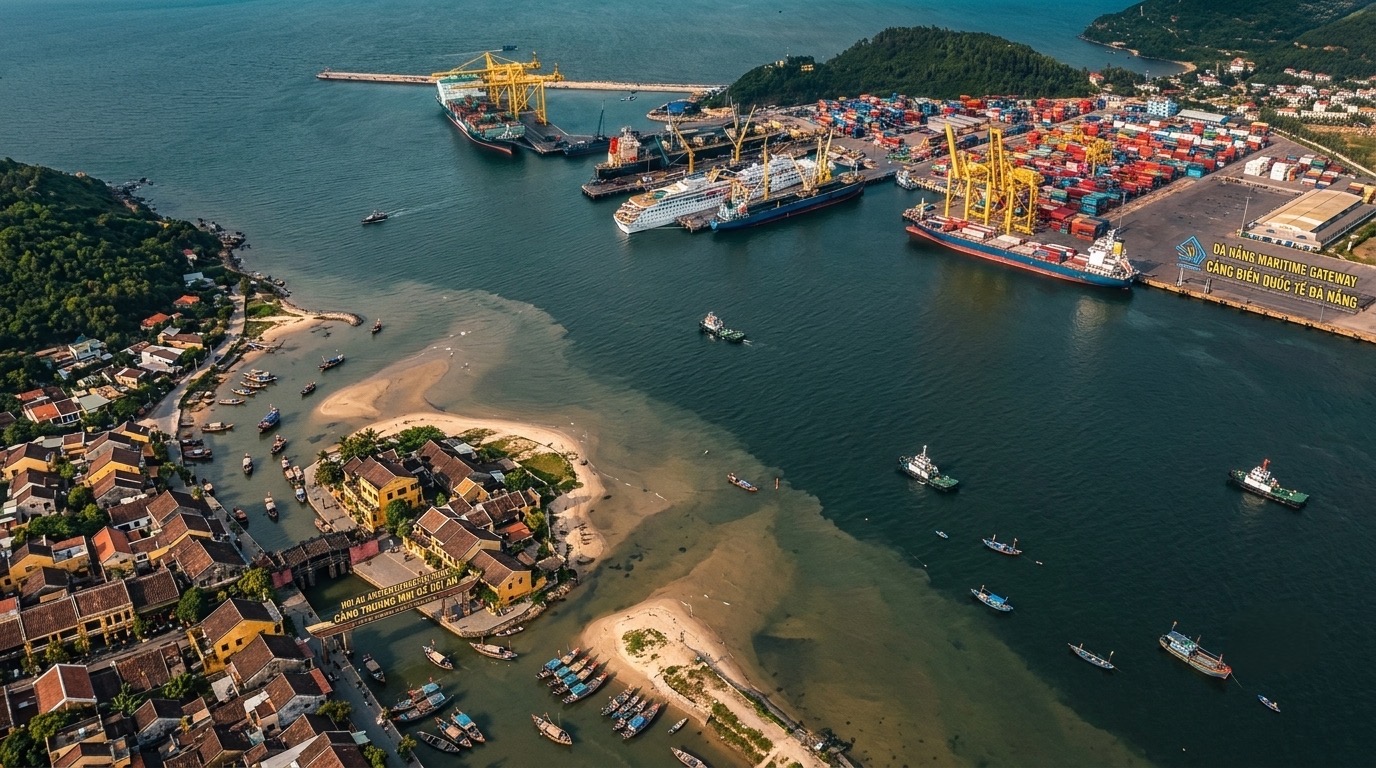
As Hoi An declined as a major international port, Da Nang increasingly developed into Central Vietnam’s principal maritime gateway.
As Hoi An’s role declined, Da Nang increasingly became the more important maritime gateway in Central Vietnam. Da Nang offered deeper and more suitable waters for larger vessels and eventually developed into the region’s major port — especially during the French colonial period.
This created a fascinating historical contrast:
- Hoi An – historic trading town
- Da Nang – modern deep-water port
The two cities are only a relatively short distance apart, but their roles became very different. Today, Da Nang is a major modern city and port. Hoi An became famous for something completely different: its surviving historic urban landscape.
6. Why Did Merchants Move Away From Hoi An?
There wasn’t a single day when everyone simply left. The transition happened gradually.
As navigation became more difficult and alternative ports became more attractive, merchants had fewer reasons to use Hoi An as their primary commercial base. Economic activity shifted. Some businesses moved. Trade patterns changed. And the town gradually became less important internationally.
By the 19th century, Hoi An was no longer the major international trading center it had once been.
But something unexpected happened next. The decline protected the town.
7. How Hoi An Changed After Its Decline
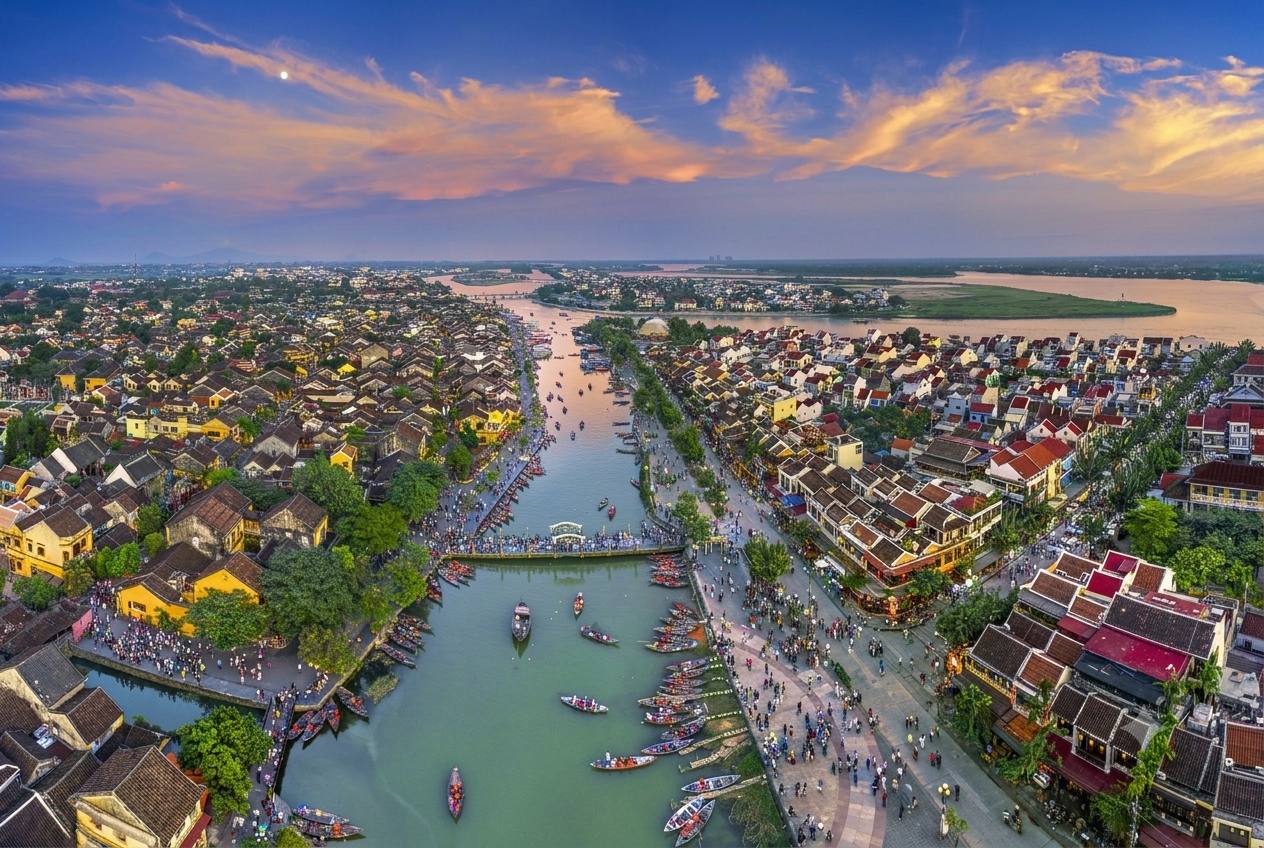
Hoi An’s decline as a major port helped preserve much of its historic urban character.
When a city is prosperous, people constantly want to improve it. Old buildings are demolished. New roads are built. Traditional houses are replaced. Urban landscapes change.
Hoi An experienced much less of this large-scale modernization after losing its position as a major international trading port. The town became quieter. Its historic buildings remained. Its street layout survived. Traditional merchant houses continued to exist.
And the old town gradually became a remarkable record of an earlier period — the Hoi An Ancient Town we know today.
This creates one of the most fascinating paradoxes in Hoi An’s history: The decline that hurt Hoi An economically helped preserve Hoi An culturally.
8. How Hoi An’s Decline Helped Preserve the Ancient Town

Hoi An’s preserved historic urban landscape was recognized as a UNESCO World Heritage Site in 1999.
When people ask “Why does Hoi An still look so old?”, you can give them a much more interesting answer than “Because it is a UNESCO site.”
UNESCO recognition came much later. First came the historical circumstances that allowed the old town to survive.
Hoi An’s reduced economic importance meant that it experienced less pressure for large-scale redevelopment. Then, decades later, conservation efforts helped protect this surviving heritage.
In 1999, Hoi An Ancient Town was inscribed as a UNESCO World Heritage Site, recognized for its exceptional preservation as a Southeast Asian trading port.
So the story is: Trading port → Commercial decline → Less redevelopment → Historic survival → Conservation → UNESCO World Heritage Site.
That sequence explains Hoi An far better than simply saying “Hoi An is an old town.”
9. Is Hoi An Still a Trading Port Today?
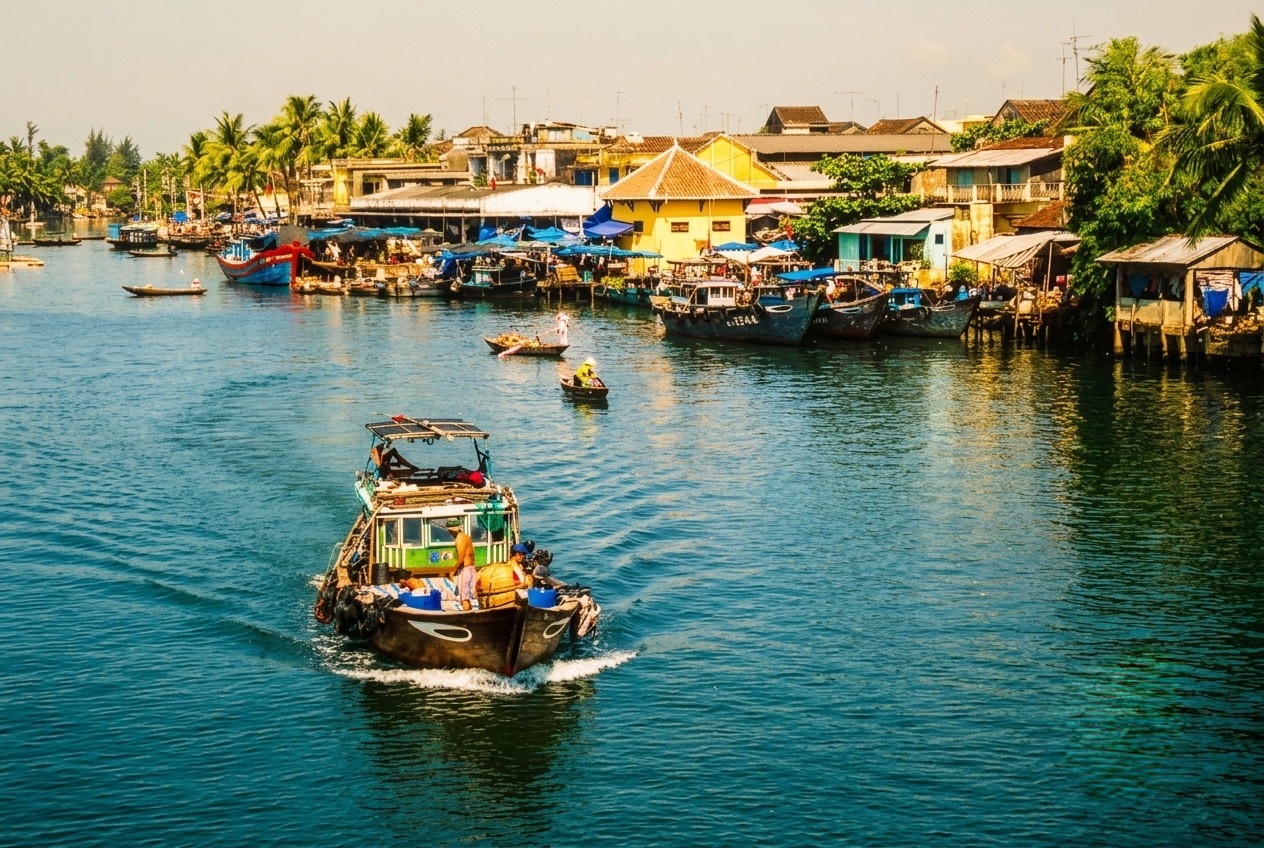
Today, the Thu Bon River is part of Hoi An’s tourism, fishing and everyday local life rather than a major international shipping route.
Not in the way it was during its historical peak.
Today, Hoi An is primarily known as a heritage, cultural and tourism destination. Small boats still use the waterways. Fishing communities remain active. Local commerce continues. But Hoi An is no longer competing with modern deep-water ports for large-scale international shipping.
Its economic identity has changed. And perhaps that is appropriate. The same town that once welcomed international merchants now welcomes international travelers. The cargo has changed. The visitors have changed. But the idea of Hoi An as a place where people from different cultures meet has remained.
10. Frequently Asked Questions
11. What Hoi An’s History Can Teach Travelers Today
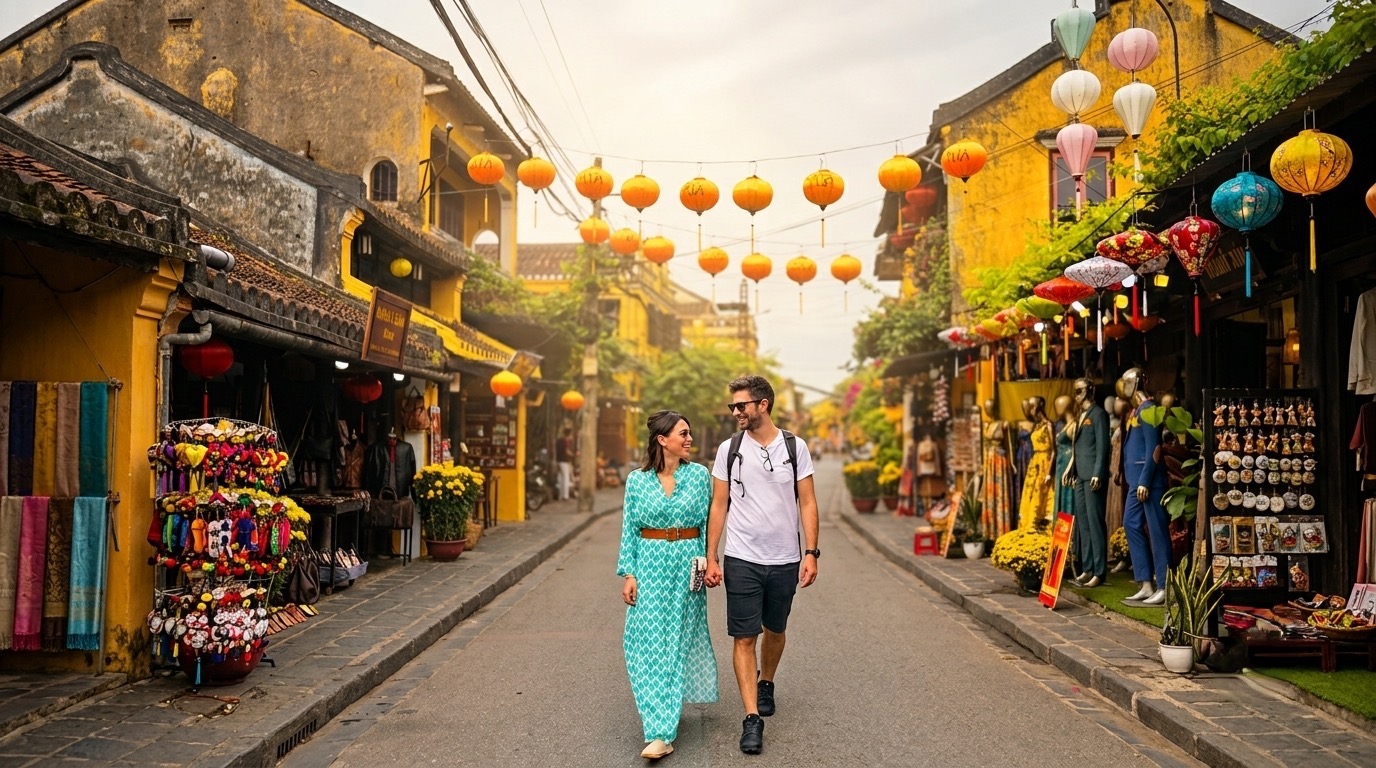
Discover the history behind Hoi An’s ancient streets, merchant houses and trading-port heritage with a local guide.
The next time you stand beside the Thu Bon River, look at Hoi An differently.
The yellow buildings aren’t simply old houses. The river isn’t simply a pretty place for photographs. The narrow streets aren’t simply charming.
Together, they tell the story of a city that was once connected to the wider world through international trade. And then, when that trade declined, the town changed direction.
Hoi An stopped being important because of what it could sell. And eventually became important because of what it managed to preserve.
That is one of the reasons I believe Hoi An is best experienced with someone who can explain the stories behind what you are seeing.
Want to understand the real story behind Hoi An?
Walk through the historic streets with a local guide and discover the trading history, architecture and local life of Hoi An Ancient Town.
🚶 Explore Hoi An Ancient Town Walking Tour →Ready to Discover the Real Hoi An?
Join a local guide and experience Hoi An beyond the surface — history, architecture and the story of its lost trading port.
Book Hoi An Walking Tour →
Written by Billy
Billy is a native Hoi An tour guide with over 8 years of experience leading cultural, walking, cycling and food tours. He specializes in sharing authentic local stories and helping travelers understand both the Ancient Town and the quieter countryside beyond it.
Contact Billy Private Tours