
If there is one dish that truly captures the living history and soul of Hội An, it is undoubtedly Cao Lầu.
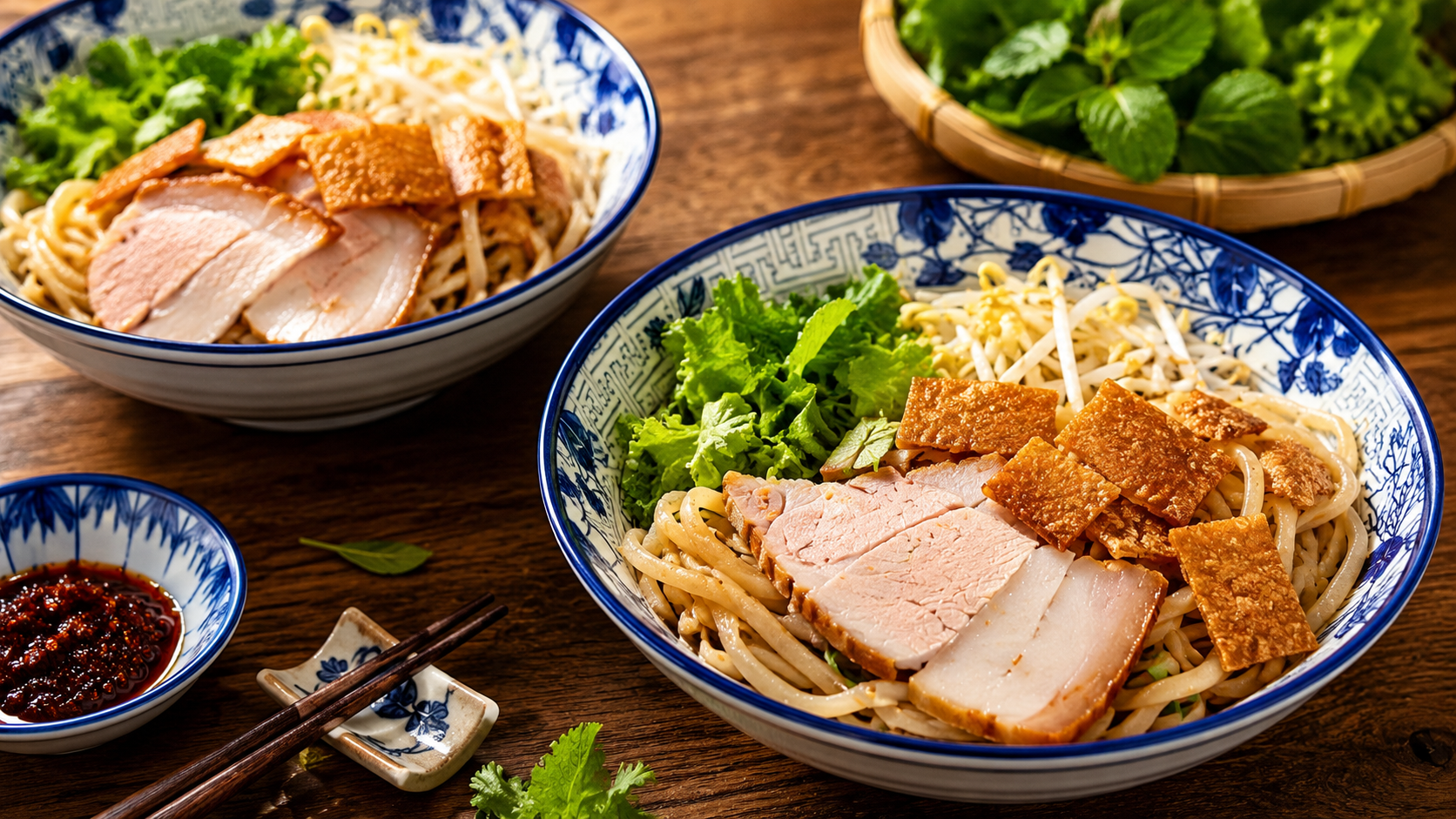
Cao Lầu is one of Hội An’s most iconic local dishes – thick chewy noodles, char siu pork, and fresh herbs.
In the heart of Hội An’s moss-covered Ancient Town, stepping into a wooden noodle shop brings an unmistakable sensory experience: the aroma of five-spice pork simmering on a stove, the rustic clatter of chopsticks against ceramic bowls, and the satisfying crunch of fried noodle squares. At the center of it all is Cao Lầu.
Cao Lầu looks deceptively simple at first glance, but it is entirely unique in Vietnamese gastronomy. It is not a noodle soup like Phở, nor is it as soft and delicate as White Rose Dumplings. Instead, Cao Lầu is a dry noodle dish steeped in historical fusion, hyper-local ingredients, and centuries-old culinary traditions.
📑 Table of Contents
- 1 What is Cao Lầu? A Sensory Overview
- 2 History & The Story Behind “High Floor”
- 3 The 3 Local Elements Behind Unique Noodles
- 4 How to Eat Cao Lầu Like a Local Insider
- 5 Cultural Fusion: Japanese & Chinese Influences
- 6 Best Places to Eat Cao Lầu (Local Comparison)
- 7 Cao Lầu vs White Rose Dumplings
- 8 Frequently Asked Questions
What is Cao Lầu? A Sensory Overview
Cao Lầu is the definitive culinary signature of Hoi An. Unlike typical rice noodles that are soft and white, Cao Lầu noodles are thick, brownish-yellow, firm, and distinctly chewy with a subtle smoky aroma.
A traditional bowl features a layer of fresh herbs from Tra Que village, topped with hand-cut noodles, sliced char siu pork loin, crispy fried noodle crackers, and a small ladle of concentrated, savory pork gravy reduction instead of broth. The first bite delivers a firm, springy chew followed by the sweet-savory depth of five-spice pork and the bright freshness of Tra Que herbs, leaving a rich yet perfectly balanced taste on the palate.
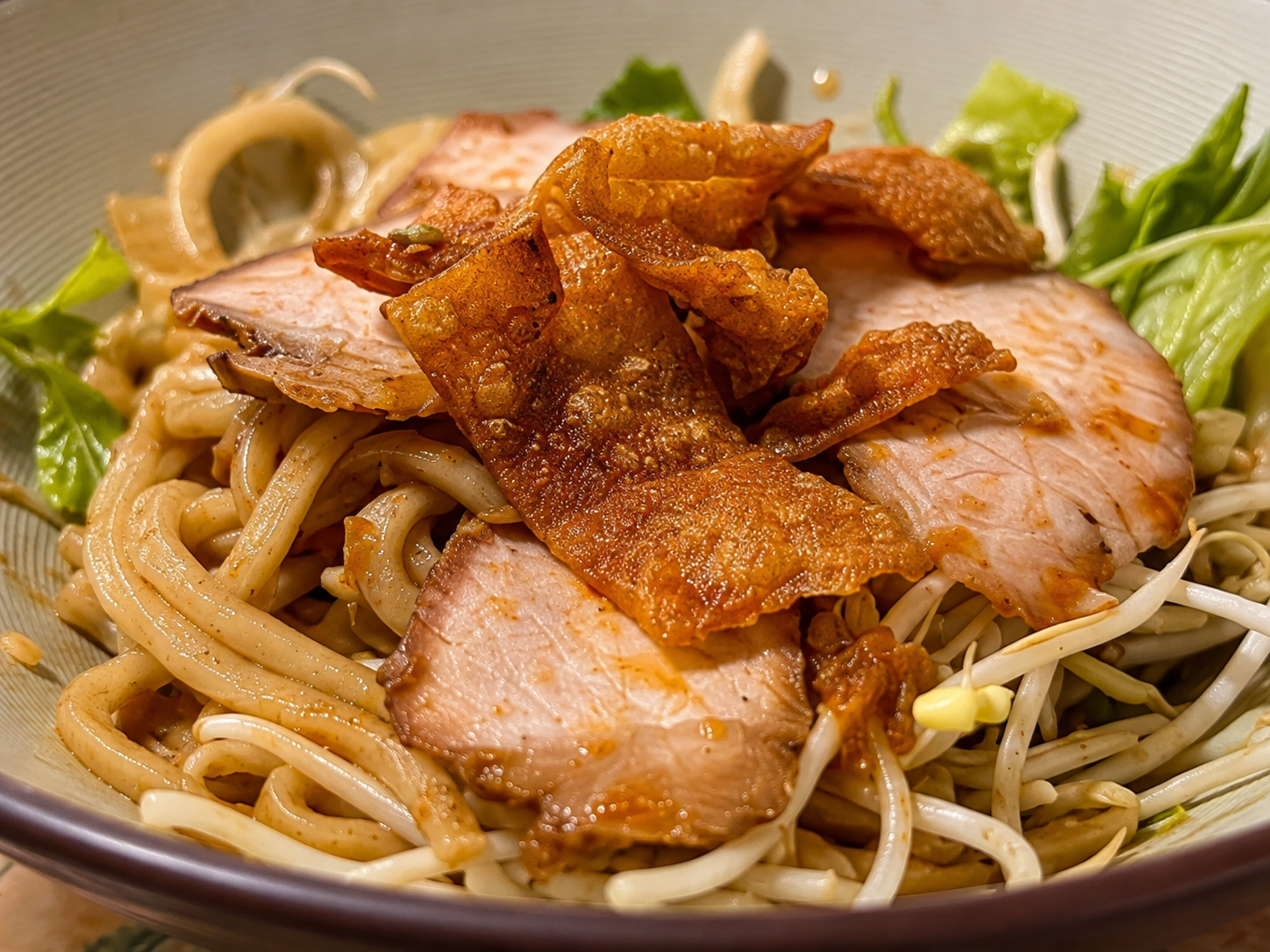
Thick, chewy Cao Lầu noodles topped with caramelized char siu pork and crunchy crackers.
History & The Story Behind “High Floor”
Between the 16th and 18th centuries, Hoi An flourished as one of Southeast Asia’s primary international trading ports. Merchant fleets from Japan, China, Portugal, and the Netherlands resided here for months at a time waiting for favorable trade winds.
The name Cao Lầu remains part of Hội An’s culinary folklore. One popular explanation connects the name with the idea of eating upstairs, or on a “high floor,” during the town’s prosperous trading era. The story is charming, but its historical accuracy is uncertain, and local heritage researchers have proposed other explanations for the name.
The 3 Local Elements Behind Cao Lầu’s Unique Noodles
Traditionally, the distinctive character of Cao Lầu has been closely associated with three local elements: ash from Cù Lao Chàm, water from the Ba Le Well, and fresh herbs from Tra Que village. Together, these ingredients and techniques give Hoi An’s noodles their unique texture, color, and flavor.
Cham Island Ash Water
Local rice is traditionally soaked in lye water made from ash, giving the noodles their distinctive firmness and pale yellow color.
Ba Le Well Water
Water traditionally associated with the historic Ba Le Well in Hoi An is an important part of the traditional noodle-making process.
Steaming the Noodles
After the rice flour is kneaded, rolled, and cut into thick strands, the noodles are steamed to develop their distinctive firm and chewy texture.
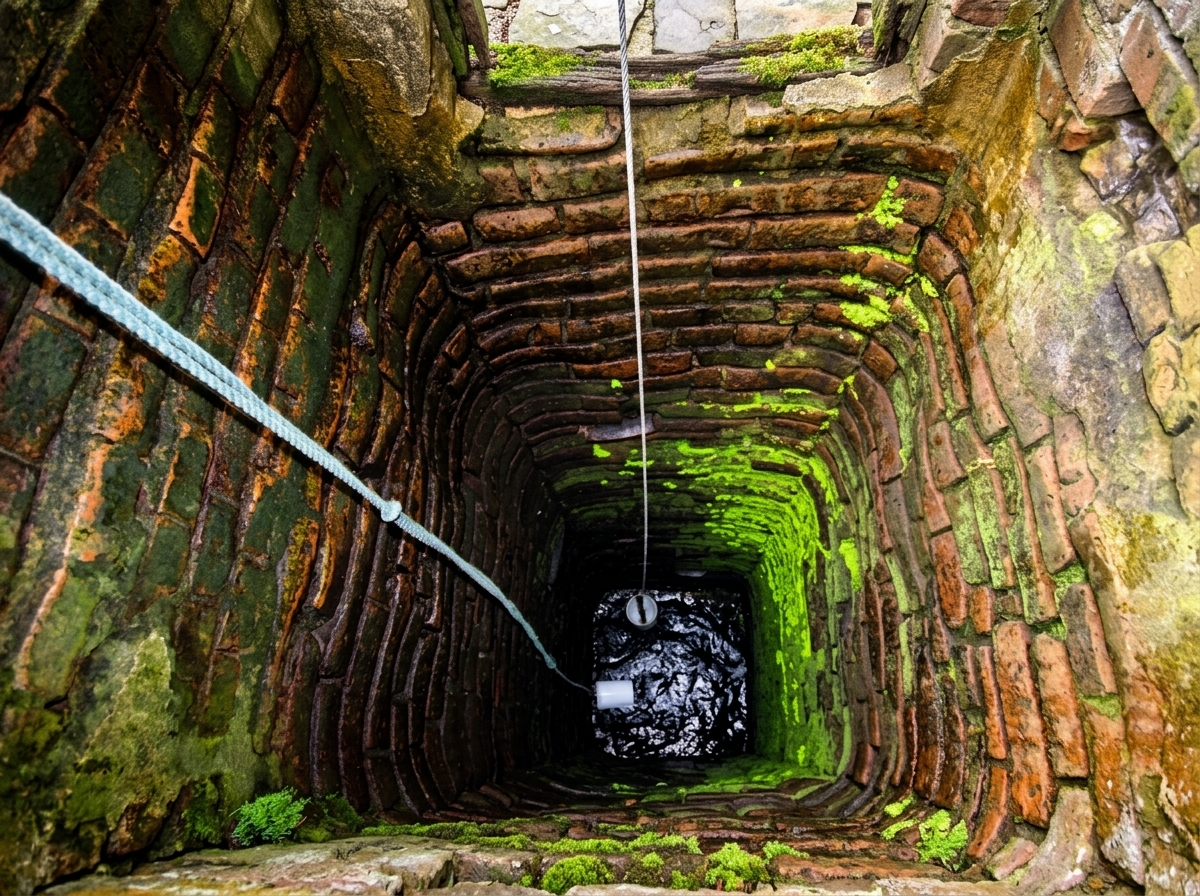
The historic Ba Le Well, traditionally associated with the production of authentic Cao Lầu noodles.
How to Eat Cao Lầu Like a Local Insider
To fully appreciate the balance of textures in a bowl of Cao Lầu, follow these local dining rituals:
- Mix thoroughly before eating: Cao Lầu relies on a small amount of concentrated pork gravy at the bottom of the bowl. Thoroughly toss the noodles, pork, herbs, and crispy crackers so every strand gets coated.
- Add fresh green chili and lime: A squeeze of fresh lime juice and a slice of spicy local green chili cuts through the richness of the char siu gravy.
- Eat it fresh and firm: Do not leave the noodles sitting too long in the gravy; eat them immediately to experience the contrast between chewy noodles and crisp crackers.
- Best time to eat: Locals typically enjoy Cao Lầu for late breakfast or early lunch when the pork broth is freshest and herbs have just arrived from Tra Que village.
Cultural Fusion: Japanese & Chinese Influences
Cao Lầu is an edible timeline of Hoi An’s multicultural heritage:
- Japanese Connection: The noodles have often been compared with Japanese Udon because of their thick, chewy texture and the traditional technique of rolling and cutting the dough. However, the exact historical relationship between the two noodles remains uncertain.
- Chinese Influence: The marinated, five-spice roasted pork topping is directly adapted from Cantonese Char Siu (Xá Xíu).
- Vietnamese Identity: The generous use of fresh Tra Que herbs, rice-based fried crackers, fish sauce seasoning, and wood-ash processing makes the dish distinctly Vietnamese.
Ultimately, Cao Lầu stands as a beautiful testament to Hoi An’s golden trading era—seamlessly weaving foreign culinary inspirations into an irreplaceable Vietnamese masterpiece.
Best Places to Eat Cao Lầu in Hoi An (Local Selection)
Here are four top-rated spots recommended by local guides, ranging from historic heritage houses to street-side favorites:
| Eatery Name | Address | Approx. Price | Best Time | Highlights |
|---|---|---|---|---|
| Cao Lầu Thanh | 26 Thai Phien St. | 35,000–45,000 VND | ⏰ Go Early | A local legend famous for deeply aromatic pork gravy and hand-cut firm noodles. Often sells out early. |
| Quán Ăn Trung Bắc | 87 Tran Phu St. | 50,000–65,000 VND | All Day (8:00 – 21:00) | Operating inside a 100+ year-old ancient wooden house. Offers authentic traditional flavors in a historic ambiance. |
| Cao Lầu Bà Bé | Hoi An Central Market | 30,000–40,000 VND | Morning & Afternoon (7:00 – 14:00) | A bustling market stall beloved by locals for hearty portions and extra crispy square crackers. |
| Cao Lầu Hai | 6A Truong Minh Luong St. | 35,000–45,000 VND | Lunch & Evening (11:00 – 20:00) | A quiet street-side spot known for tender char siu pork marinade and friendly neighborhood hospitality. |
Popular local stalls like Cao Lầu Thanh often sell out early in the afternoon. Plan an early visit to secure a seat and enjoy the freshly prepared pork sauce.
Cao Lầu vs White Rose Dumplings
| Feature | Cao Lầu | White Rose Dumplings |
|---|---|---|
| Texture | Chewy, Firm & Crunchy | Silky, Soft & Delicate |
| Flavor Profile | Smoky, Savory Five-Spice & Herbal | Light Sweet-Savory Seafood & Garlic |
| Meal Role | Hearty, Filling Main Course | Light Starter / Appetizer |
While Cao Lầu provides a robust and satisfying main meal, pairing it with White Rose Dumplings offers a light, delicate contrast that completes any authentic Hoi An food journey.
Experience Hoi An’s Culinary Heritage Firsthand
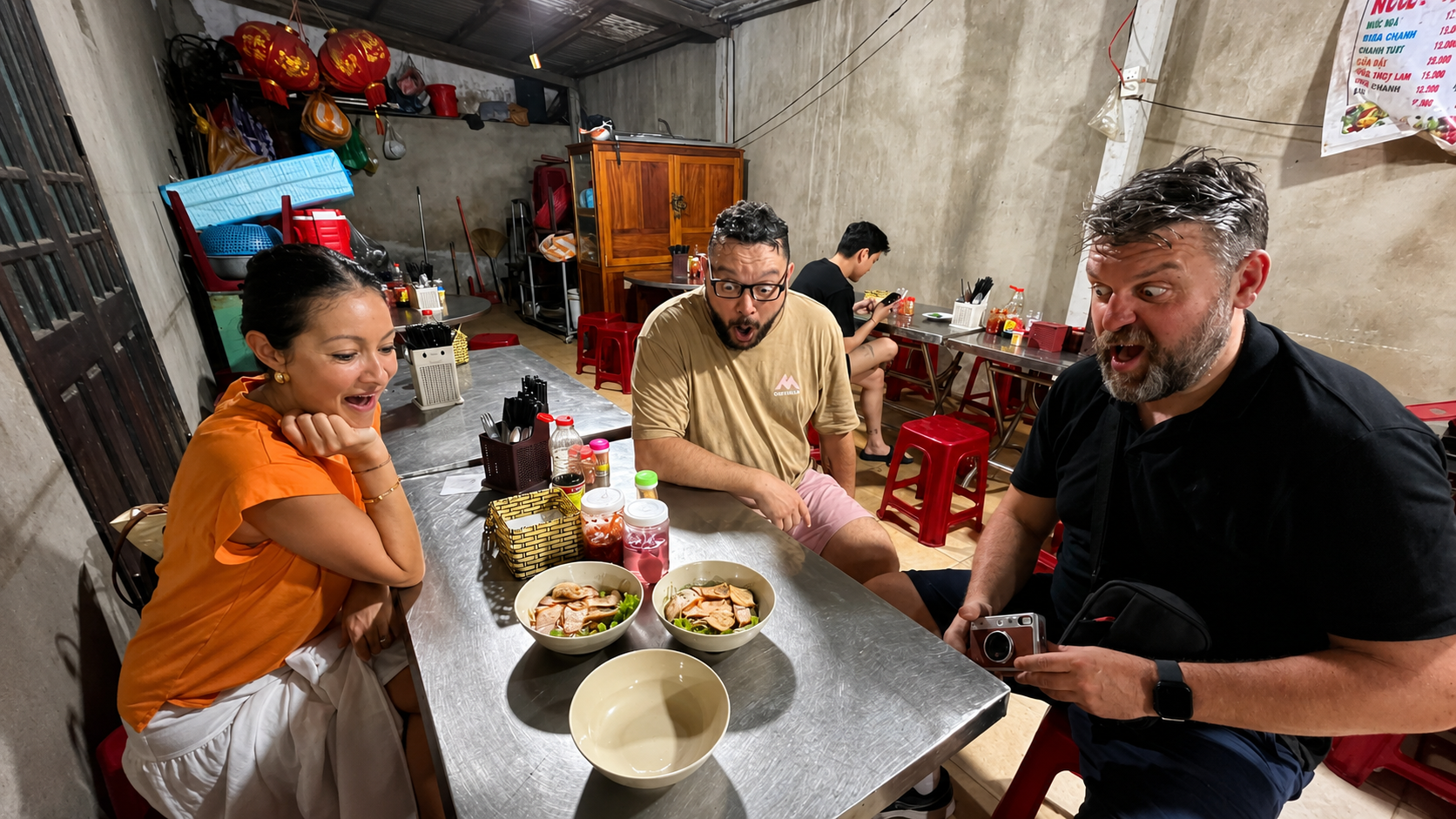
Discover tucked-away alleyways and taste authentic Cao Lầu with a guide born and raised in Hoi An.
Taste Authentic Cao Lầu with a Local Guide
Every bowl of Cao Lầu tells a story of ancient trade routes and local craft. Explore hidden eateries, meet veteran cooks, and taste genuine Hoi An specialties beyond the tourist trail.
🍜 Explore Our Hoi An Street Food Tour →Frequently Asked Questions
A Living Taste of Hoi An’s History
A bowl of Cao Lầu is far more than a delicious meal—it is an edible monument to Hoi An’s past as a bustling trading port. From the traditional ash water to the herbs of Tra Que, every bite connects you to generations of local craft and culinary tradition.
Ready to Explore Hoi An’s Hidden Flavors?
We hope every bowl of Cao Lầu brings you closer to the rich heritage of our home. If you’d like a local to show you the best spots, we’re always happy to help.
Discover Our Local Food Experiences →
Written by Billy
Billy is a native Hoi An tour guide with over 8 years of experience leading cultural, walking, and street food tours. Passionate about local heritage, he specializes in revealing authentic food stories and hidden historical gems across Central Vietnam.
Contact Billy Explore Private Tours